OpenClaw rescue and troubleshooting
Fix broken installs, repair integrations, clean up channel wiring, and stabilize a deployment that is already live but not behaving the way it should.
Use OpenClaw support for troubleshooting, rollout help, scoped implementation, or strategic guidance when the team needs real leverage instead of more trial and error.
This is not generic consulting theatre. It exists to fix deployments, sharpen operators, and help teams make better rollout decisions faster.
Fix broken installs, repair integrations, clean up channel wiring, and stabilize a deployment that is already live but not behaving the way it should.
Refine prompts, approvals, workflow structure, skills, and memory so the operator behaves like part of the business instead of a demo.
Use us for scoped implementation, AI systems guidance, rollout planning, or a retainer when the team needs a stronger operating partner.
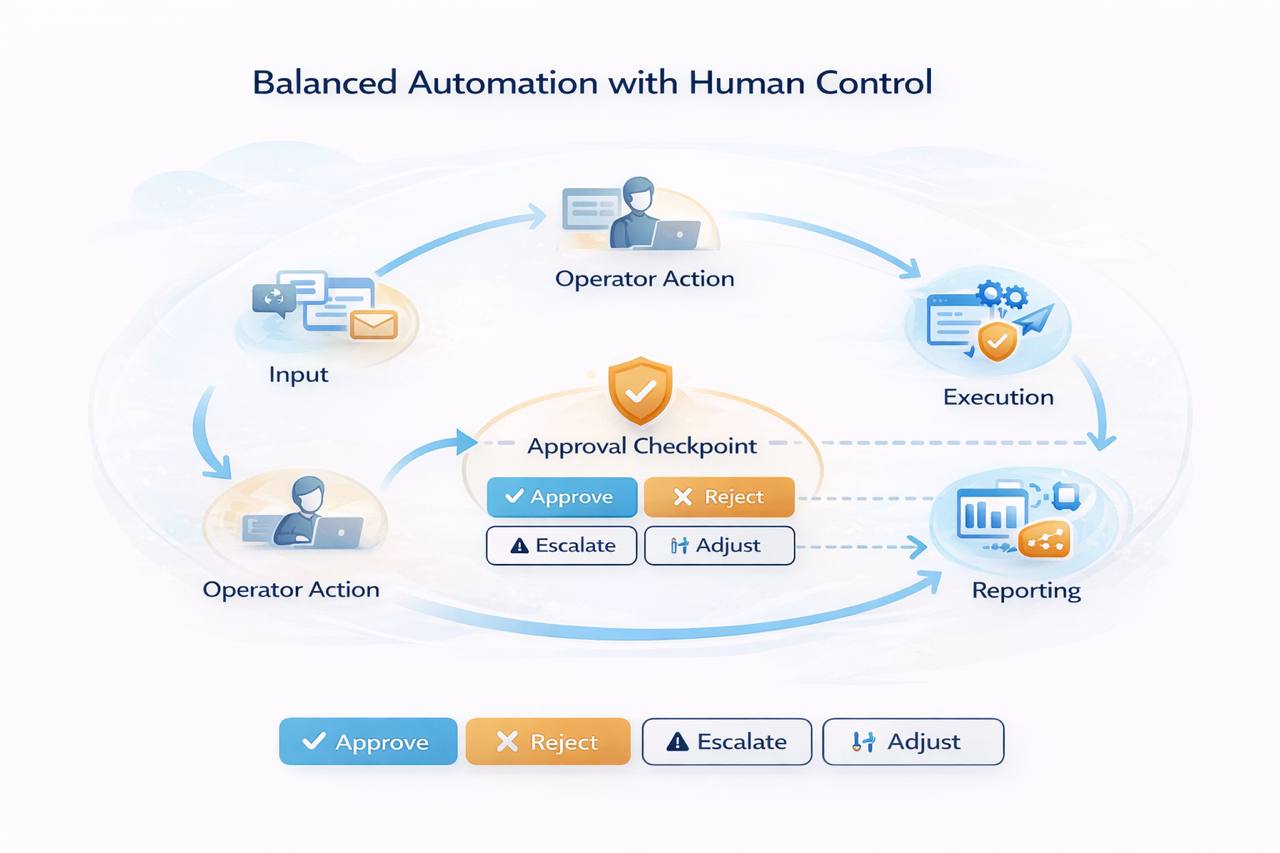
For troubleshooting, reviews, tuning, or getting unstuck fast when the issue is clear and the team just needs capable help.
For defined builds, migrations, workflow automation, audits, or deployment work that needs a clear statement of work and outcome.
For teams that need recurring implementation support, faster escalation, and strategic help while the operator system expands.
Use hourly support when the issue is tactical and the team needs fast operator-level help instead of a larger scoped engagement.
Pick hourly help, a scoped project, or a retainer based on whether the need is tactical, delivery-specific, or ongoing.
We review the deployment model, workflow, current issue, and any access constraints before touching the work.
We troubleshoot, implement, review, or guide the system toward a cleaner operating state instead of adding more ad hoc fixes.
You leave with a resolved issue, scoped next phase, or documented path forward instead of a vague support conversation.
No. We can help with OpenClaw environments that were self-installed, partially configured, or already live and in need of repair.
Use hourly support when the issue is contained and tactical. Use a project inquiry when you already know the work is a larger deliverable or system change.
Yes. The support lane includes strategic guidance when it helps the team make a better deployment or workflow decision, not just break-fix work.
Yes. That is one of the cleanest uses of it: tuning the operator after launch, expanding capabilities, or fixing issues discovered in real use.
Book hours when the need is tactical, send a project inquiry when the work is already clear, or move to a retainer when the operator system is becoming a recurring part of the business.